



Tips for Going on a Cruise With Migraine
A cruise is a great option if you're craving an escape that combines new experiences, exciting excursions, and plenty of rest and relaxation - all with minimal planning. If you live with migraine, you know the challenges a new environment can bring, but don't let that stop you. With a little preparation and the right tools, you can enjoy the vacation you deserve.
Common cruise challenges for people with migraine
The following are common issues to be aware of when cruising with migraine:
- Stress: While ocean getaways are all about unwinding, it’s natural to feel stressed while traveling. Catching a flight to your departure port, managing your time carefully during shore excursions or feeling uneasy about being somewhere new can all trigger a cruise migraine.
- Routine disruption: Any change to your normal routine — including your diet and sleep schedule — may cause symptoms to flare up.
- Changes in altitude: If you have to fly to and from your departure port, you might develop a migraine from shifts in barometric pressure.
- Motion sickness: Motion sickness can manifest as nausea, dizziness and headaches on a cruise. For people with migraine, these symptoms can trigger or worsen an attack. This is especially true for those with vestibular migraine, which already causes feelings of vertigo.
- Environmental triggers: New people and places bring various smells, sounds, foods and other possible triggers. This can be amplified in crowded parts of the cruise ship.
- Sun exposure: Fun in the sun can pose several obstacles for people with migraine. Possible triggers include bright light reflecting off the water, overheating, dehydration from sweating and strongly scented sunscreen.
How to plan a migraine-friendly cruise
The following tips can help you plan a cruise that minimizes the chance of migraine:
Research the ship and itinerary
To reduce your chance of developing migraine on your cruise, research the ship and itinerary before you leave. The more information you have, the better you can prepare and avoid potential triggers.
Study the ship’s layout so you know where key spots are, including:
- Medical facilities
- Quiet places to retreat from noise and crowds
- Water stations to refill your water bottle
- Restrooms
- Shaded and air-conditioned areas
- Dining rooms and places to grab a quick snack
If possible, request a cabin in a quiet part of the ship away from gathering places and entertainment spots. If you're worried about getting a seasickness migraine, choose a room in the middle of the ship on a lower deck where you'll feel less movement. If smells are a problem for you, a cabin with a balcony or window may be the best option so you can access fresh air whenever you need it. You should also confirm that the cruise line does not allow smoking anywhere on the ship.
Approach live entertainment with caution, as some shows may feature flashing lights, smoke and other environmental triggers.




Have a migraine action plan
Create a migraine action plan before you board the cruise ship by designating "retreat" spots where you can take a break from overwhelming environments or recover during an attack. If you're particularly sensitive to certain foods or environmental triggers, reach out to the cruise line before departure to see what accommodations are available. While on board, chat with the staff to let them know how migraine may impact you, so they can offer guidance or lend a hand should symptoms arise.
Assemble a small migraine toolkit with your medications and other helpful tools to keep on you everywhere you go. In the months leading up to your trip, use CEFALY’s PREVENT mode every day to reduce the chance of developing migraine while at sea.
Buy travel insurance with emergency medical benefits.
If you need to see the shipboard doctor because of a migraine attack, you may receive a hefty bill at the end of your cruise. Medical care received on a cruise ship typically isn't covered by your health insurance plan, and even basic services (like a rehydrating IV, or getting over-the-counter pain medication) are going to cost a lot.
A solid travel insurance plan for cruises can cover the cost of the medical care you receive in an emergency. Just make sure the plan you buy covers pre-existing medical conditions, like migraine.
Maintain your routine
While vacations are a break from the daily grind, people with migraine should try to maintain a similar routine. Restful, consistent sleep is critical for feeling your best and may help you avoid a migraine attack, and dietary disruptions can lead to digestive problems that can worsen symptoms. Too much unpredictability can also trigger stress-related migraine. Try not to plan anything for the first day at sea so your body has time to acclimate.
As you prepare for your trip, note which parts of your day help you feel your best and plan to continue those habits while aboard the ship. For example, if starting your morning with a centering yoga practice helps you stay calm throughout the day, be sure to set aside a time and place on board to do the same.
Be mindful of your diet
Cruises are a great time to try new foods, especially during shore excursions. Be mindful of what and how often you eat. If you have food-related triggers, don’t hesitate to ask the dining staff about ingredients. It might also help to choose at least one familiar meal a day, like simple scrambled eggs and fruit for breakfast or a nutritious salad for lunch. This will help keep your digestive system more regulated.
Don’t forget to eat regularly during all the excitement. Skipping meals is a trigger for many people with migraine. You should also be mindful of your alcohol consumption, as dehydration and hangovers can trigger or exacerbate migraine symptoms.
Take steps to minimize stress
Even good stress, like anticipation and excitement, can trigger migraine in some people. Take steps to reduce your mental load before and during your trip. Consider packing items that help you feel calm and grounded, like earbuds to listen to a meditation app or your favorite tea blend. Avoid overbooking yourself while on shore excursions. Instead of trying to see every sight in just a few hours, prioritize one or two so you can take your time getting there and take it all in without feeling rushed.
The same rule applies while on board. For every high-energy activity, like dancing or a concert, plan at least two relaxing ones, like lounging or a massage.
Schedule transition days
You'll likely be tired when you return home, especially if you're active during shore excursions. Schedule a couple of transition days between vacation and returning to work if possible. This gives your body time to recover as you return to your normal diet, sleep schedule and routine.
During this time, prioritize rest and relaxation so you can face work and other responsibilities feeling your best.
What to bring on your cruise if you have migraine
Pack the following essentials for a more comfortable, migraine-friendly vacation:
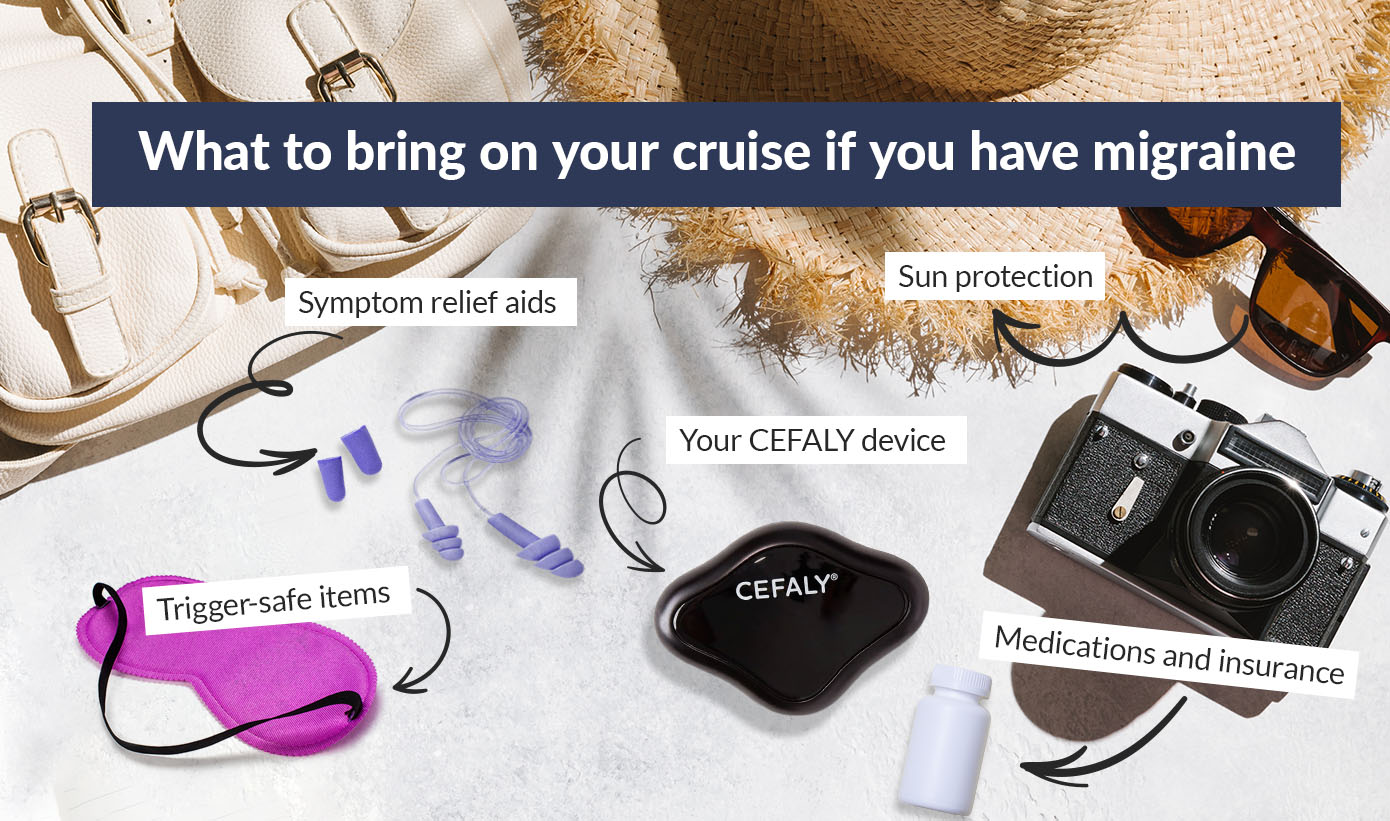
Sun protection
Part of a cruise’s appeal is getting to soak in the sun while you lounge, swim or watch the horizon. Too much sun can be risky for people with migraine, as it can trigger attacks caused by dehydration or overheating. These items can help:
- At least two pairs of sunglasses so you always have a backup
- A sun hat with a wide brim
- A wearable, battery-operated fan to keep around your neck
- Lightweight clothing that you can easily layer
- An insulated refillable water bottle
- Electrolyte powder or tablets to replenish after sweating
Your CEFALY device
Keep your CEFALY device charged and ready to use. At the first sign of a migraine attack, use CEFALY’s ACUTE treatment mode to help relieve pain. Use the PREVENT mode every day to reduce the frequency of attacks.
Medications and insurance
Bring any prescription medications you take to manage migraine, including a few extra doses in case of delays. Keep copies of your prescriptions with your medications for easy reference, and remember to bring your insurance information in case you need medical care while traveling.
You might also benefit from Dramamine or scopolamine patches for motion sickness and sleeping medication to help you maintain a consistent sleep schedule.
Trigger-safe items
The key to avoiding a cruise migraine is to know your triggers and take steps to avoid them. These items may help:
- Unscented toiletries
- A portable air filter to keep in your cabin
- An eye mask
- Snacks you know are safe to eat, like plain crackers
- Calming tea
- Blue light-blocking glasses if you plan to use an e-reader
Be sure to check the cruise line’s policy before bringing foods, drinks or appliances on board.
Symptom relief aids
Bring any items that can help you manage migraine symptoms, like:
- Earplugs
- Peppermint oil or ginger candies for nausea
- An ice cap to keep in your mini fridge
- Acupressure wristbands for motion sickness
Let CEFALY help you have the vacation you deserve
If the sea is calling, don’t let migraine keep you from taking a fun, relaxing vacation. Learn how CEFALY puts you in control of your migraine treatment so you can get back to the things you love.






Articles récents

Le guide essentiel des dispositifs médicaux pour la migraine
CEFALY is an FDA-cleared medical device that targets the main pathway for migraine pain: the trigeminal nerve (the…

“CEFALY Gave Me My Life Back”: Camille’s Search for a Drug-Free Migraine Treatment
I've lived with migraine since my second pregnancy with my daughter. That pregnancy marked the beginning of my…

What Patients Need to Know About Episodic Migraine vs. Chronic Migraine
While official definitions classify episodic migraine as fewer than 15 headache days per month and chronic migraine as…