



Tips for Postpartum Migraine
- Types of postpartum headaches
- What is postpartum migraine?
- What causes migraine postpartum?
- How long does postpartum migraine last?
- How to treat postpartum migraine
Many women who live with migraine have fewer migraine attacks during pregnancy. However, it’s common to experience a worsening of migraine symptoms in the weeks following childbirth. One long-term study found that more than 50% of women with migraine experience a recurrence during the first month after delivery. Even if you’ve never had migraine before, you may start experiencing headaches or migraine attacks postpartum. They’re caused by all the physical and hormonal changes your body goes through after birth.
Severe head pain can be especially challenging when caring for a newborn, so finding relief is vital when those pounding headaches hit. Putting your needs first and reducing pain will help you provide the best care for your baby and improve your postpartum experience.
Types of postpartum headaches
A severe headache is one symptom of a migraine attack, but migraine is not the only type of headache you can get postpartum. Understanding the various types of headaches can help you determine which one you’re experiencing and find a suitable treatment option. Common headaches that occur postpartum include:
- Migraine headache: A migraine headache causes pulsating or throbbing pain on one side of the head. It is often accompanied by other symptoms like nausea or dizziness.
- Tension headache: Mild to moderate head pain that feels like tight pressure on your forehead or both sides of your head is called a tension headache. These headaches usually aren’t associated with other symptoms, except for tenderness in the neck, shoulders and scalp.
- Cluster headache: Cluster headaches are rare but extremely painful. They occur suddenly and cause piercing pain behind one eye or side of your head. The eye where the pain is may become red and teary, and the area around it can become droopy or swollen.
- Spinal headache: Women who have an epidural during labor may get a spinal headache or post-dural puncture headache. These headaches often resolve after 24 hours but cause a dull, throbbing pain that worsens when you sit or stand. The pain may decrease when you lie down.
If you are experiencing severe, throbbing headaches within 48 hours of giving birth, along with blurred vision, light sensitivity, nausea, shortness of breath and swollen face, hands and feet, you need to see a doctor right away. You may have developed postpartum preeclampsia, which can lead to strokes or seizures when left untreated.
What is postpartum migraine?
Migraine is a debilitating neurological condition that causes full-body migraine attacks. Postpartum migraine is a form of migraine that begins or flares up after you've just had a baby. While everyone's experience with migraine is different, there are some common stages and symptoms of migraine attacks.
The first phase of a migraine attack is called prodrome, and it can happen hours or days before an attack. You may feel tired and irritable, have digestive upset, or experience other symptoms. During an attack, you may get a migraine headache along with nausea, dizziness or sensitivity to light and sound. The final stage is postdrome, which includes symptoms like fatigue, body aches and mental fog.




What causes migraine postpartum?
Migraine studies show a clear link between hormonal changes and migraine attacks. Most women experience menstrual migraine right before their period, caused by a rapid decline in the hormone estrogen. During pregnancy, estrogen and progesterone levels rise to support your developing baby. They peak in the third trimester, and women with migraine often have fewer attacks during this time.
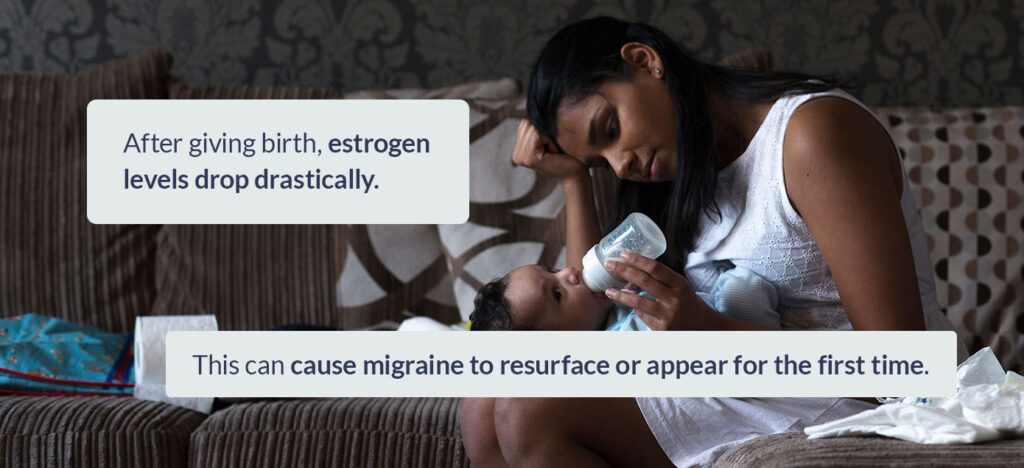
Unfortunately, your estrogen levels also drop drastically once you give birth. This can cause migraine to resurface or appear for the first time. Additionally, the first few weeks of pregnancy are often the hardest on your mind and body. Caring for a new baby can be stressful, especially if you are a first-time parent. While recovering from the birth, you have to attend to your baby’s needs and overcome many challenges. It’s easy to neglect your own needs and struggle to find time to relax and sleep.
Many of these issues are common migraine triggers. A trigger is anything that causes a migraine attack, including stress, caffeine, dehydration and lack of sleep. Your migraine may be worse because you’re experiencing multiple triggers.
How long does postpartum migraine last?
If you’ve received a postpartum migraine diagnosis, you may feel stressed or worried about how it will affect your life. Will you always feel this way? The good news is that severe postpartum migraine is temporary for many women. You’re going through intense change, and your body will need time to adjust. It takes around six weeks for new moms to recover and start having fewer migraine attacks.
However, migraine may not go away, especially if you had migraine before pregnancy. If your migraine symptoms persist long after the postpartum period ends, you can consult your doctor about creating a migraine management strategy to reduce attack frequency and severity.
How to treat postpartum migraine
Migraine management strategies include a combination of treatment options. Try the following and see what works for you:
- Medication: You can take medication to relieve postpartum migraine pain, but be careful if you are breastfeeding. Certain medications can get into your breast milk and transfer to your baby. Some safe medications include sumatriptan, acetaminophen or ibuprofen.
- Sleep: While easier said than done, you should try to get as much sleep as possible. Ask your partner, a family member or a friend to watch your baby while you take a short nap. You can also create a sleep schedule with your partner so that you each get a full night’s rest every second night.
- Ice packs: An ice pack or cold compress can provide fast relief for a migraine attack. Place it on your forehead or your neck for the best results. You can also try a warm compress, as some people prefer hot therapy for migraine.
- Self-care: Prioritizing self-care is vital for you, your baby and your family. Ensure you eat healthy foods regularly and drink enough water. Keep a water bottle with you at all times and stock your fridge with quick, easy meals. Exercise as much as possible, even if it’s just a walk around the block.
- Relaxation: Stress is a common migraine trigger, so find ways to relax. Try a massage, meditation, walking or yoga. Practice breathing exercises when you feel your stress levels rising. You can also chat with a friend or family member about what’s bothering you, which may relieve some of your worries.
Try CEFALY to Prevent & Relieve Migraine Pain
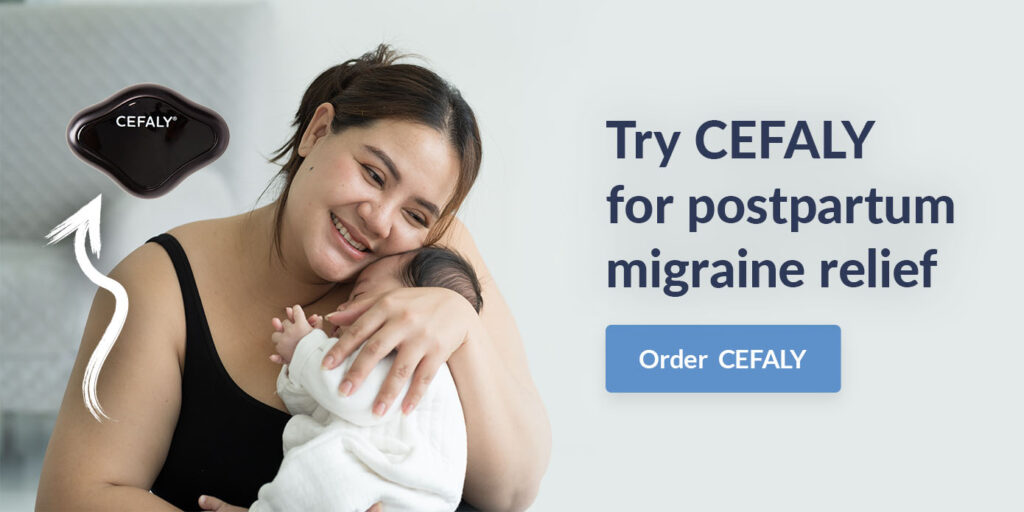
Try CEFALY for postpartum migraine relief
Neuromodulation is a clinically proven migraine therapy option that uses electrical stimulation to target nerves directly. CEFALY is the first FDA-cleared device of its kind to use neuromodulation to relieve migraine pain and reduce attack frequency. The device attaches to the forehead to stimulate and desensitize the trigeminal nerve — the primary pathway for migraine pain.
CEFALY is a drug-free migraine treatment option with minimal side effects. It has two modes - ACUTE and PREVENT. The ACUTE mode can help reduce pain during an attack, while the PREVENT mode can give you more migraine-free days with daily use. If you struggle with postpartum migraine, the ACUTE mode can significantly help with pain.
In one study, 63% of CEFALY users said their pain decreased by half or more after just one hour of ACUTE treatment. The device is easy to use and doesn’t require a prescription.
Try a CEFALY device with a 90-day money-back guarantee today!


Articles récents

Le guide essentiel des dispositifs médicaux pour la migraine
CEFALY is an FDA-cleared medical device that targets the main pathway for migraine pain: the trigeminal nerve (the…

“CEFALY Gave Me My Life Back”: Camille’s Search for a Drug-Free Migraine Treatment
I've lived with migraine since my second pregnancy with my daughter. That pregnancy marked the beginning of my…

What Patients Need to Know About Episodic Migraine vs. Chronic Migraine
While official definitions classify episodic migraine as fewer than 15 headache days per month and chronic migraine as…