



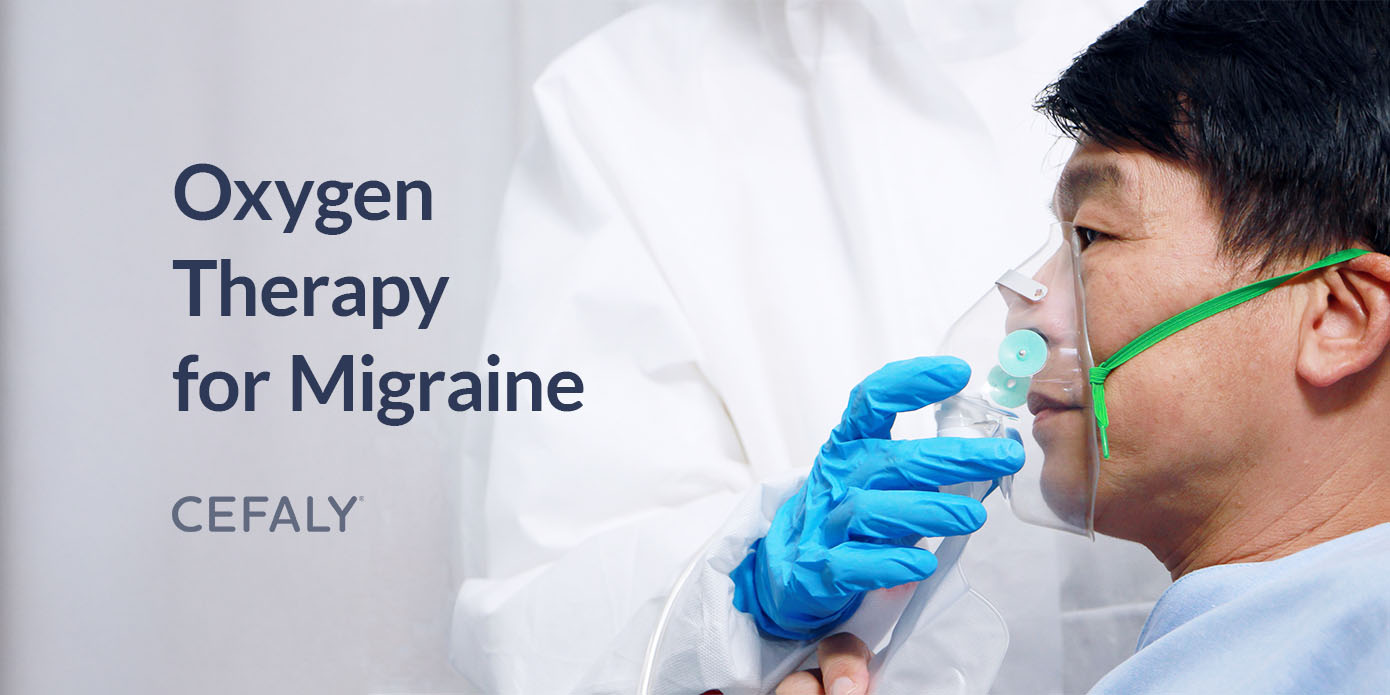
Oxygen Therapy for Migraine
Oxygen therapy is a trending topic, and many swear by its benefits for everything from improved breathing to wound repair, but will it help with migraine? People living with migraine search for treatments that actually provide relief. Since oxygen therapy may help with headache types like cluster headaches, many assume it will relieve migraine attacks as well.
Keep reading for more on the potential for oxygen therapy as a treatment for migraine and find more information about CEFALY, a clinically proven migraine treatment.
What is medical oxygen therapy?
Oxygen therapy is a treatment typically used for people with lung diseases. The lungs are responsible for filtering oxygen from the air so the body can pump it to the organs, cells and tissues. This therapy provides supplemental oxygen to help people who aren't getting enough from their primary source.
People with conditions like pulmonary fibrosis, heart failure, asthma and sleep apnea might have trouble getting sufficient oxygen to the cells. Over time, this could lead to a condition known as hypoxemia, which is when blood oxygen levels are low. A normal oxygen level is 95% or higher. When levels drop below 88%, oxygen therapy can offer lifesaving supplemental oxygen that has higher levels than typical air, making it easier to get sufficient oxygen with less strain on the lungs.
Using oxygen therapy for headaches is not commonplace, but it is a popular treatment option for one specific type - cluster headaches. The oxygen therapy used for this disorder is typically much shorter and less frequent than that used to treat lung diseases.
What a treatment session looks like
A typical oxygen therapy treatment session depends on the condition being treated. While it's usually used to treat breathing difficulties, it can also be used for skin repair and muscle growth. There are two main options depending on the ailment:
- Typical oxygen therapy session: In a typical oxygen therapy session, the patient breathes through a face mask attached to an oxygen supply. The healthcare practitioner determines the ideal oxygen concentration based on the patient’s condition.
- Hyperbaric oxygen therapy session: During a hyperbaric oxygen therapy (HBOT) session, you will sit in a large pressurized chamber filled with high-concentration oxygen. These sessions are typically used to treat wounds, burns and carbon monoxide poisoning.
Oxygen therapy for headaches typically involves inhaling 100% oxygen from a non-rebreather face mask. A typical session lasts 15-30 minutes, and it’s shown to be effective for cluster headaches.
Pros and cons of oxygen therapy
Oxygen therapy, like any other medical treatment, has its unique pros and cons that depend on the condition being treated. Here are some of the benefits oxygen therapy has to offer:
- Natural and safe
- Efficient and speedy treatment option for cluster headaches
- Minimal side effects
- Potential for combination with other treatments
There are also some cons of oxygen therapy, regardless of the condition being treated:
- Large tanks and a lack of portability
- Rarely covered by insurance
- It may be expensive
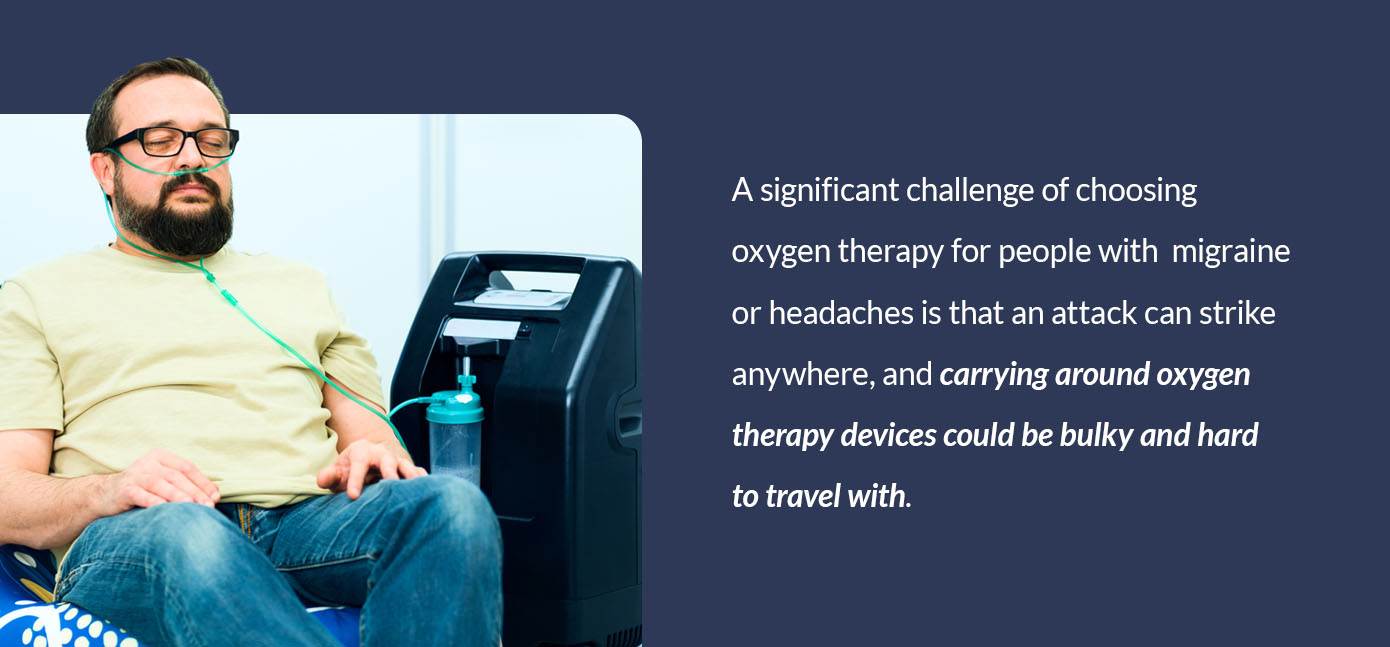
A significant challenge of choosing oxygen therapy for people with migraine or headaches is that an attack can strike anywhere, and carrying around oxygen therapy devices could be bulky and hard to travel with. On the other hand, CEFALY is an effective migraine treatment that’s TSA-compliant and portable.
How can oxygen therapy help a migraine?
Oxygen therapy may be beneficial for cluster headaches, but does oxygen help with migraine? Migraine is a neurological disorder that affects more than 1 billion people globally. Migraine disorder is more than a headache. There are many symptoms associated with it, including pulsing sensations, sensitivity to light, dizziness and aura. Since migraine disorder is different from cluster headaches, what works for one would not necessarily work for the other.
Research shows that oxygen therapy can cause vasoconstriction and suppress cortical spreading depression, which are both involved in migraine. However, research results are inconclusive, and more studies need to be done on the efficacy of oxygen therapy for migraine. Current patients should stick to migraine treatments that are recommended by clinicians and proven to work.




Proven treatments for migraine
Here are some of the top treatments for migraine prevention and relief:
Lifestyle measures
Lifestyle changes are one of the best preventive measures to take. Here are some of the top habits to adopt for preventing migraine attacks:
- Eat regular meals: Consume balanced meals regularly to prevent your blood sugar from dropping, which is a common migraine trigger.
- Exercise consistently: Regular physical activity can reduce tension and prevent migraine attacks, but you should also avoid strenuous workouts and rapid head movements.
- Reduce stress: Stress is the most commonly reported migraine trigger, and reducing your stress levels may help prevent migraine attacks. Engage in stress-reduction activities like yoga, meditation and self-care.
- Stay hydrated: Dehydration is a common migraine trigger. Ensure that you drink enough water every day to prevent migraine attacks caused by dehydration.
Medicines
There are both over-the-counter (OTC) and prescription medications that treat migraine. Preventive medicines are taken regularly and work to reduce migraine symptoms and the frequency of attacks. They are best for people who experience regular migraine attacks.
There are also abortive or acute treatments that you can take at the onset or during a migraine attack. These medications can offer speedy pain relief, although some patients can't tolerate the side effects.
Neuromodulation therapy
Neuromodulation devices stimulate nerves involved in migraine, offering a drug-free option for migraine treatment. CEFALY is the #1 FDA-cleared neuromodulation device for migraine relief and prevention. It targets the primary pathway responsible for migraine pain, sending a precise electrical impulse to the trigeminal nerve.
CEFALY is clinically proven to provide relief from migraine attacks. It's portable and easy to use. When used regularly on the PREVENT setting, it can reduce the frequency of attacks. The one-hour ACUTE treatment can provide relief during an attack.
Try CEFALY for migraine relief
CEFALY is a prescription-free, neuromodulation migraine treatment backed by multiple clinical studies. Its portable size and high efficiency offer convenience and relief. To use it, you simply attach the electrode and device to your forehead and choose the PREVENT or ACUTE option.
The CEFALY device gives you control over your treatment, allowing you to select an intensity level that brings you relief. It comes with a 90-day money-back guarantee and a 3-year warranty for your peace of mind.
Purchase your CEFALY device today and experience the benefits of clinically proven neuromodulation therapy for migraine relief.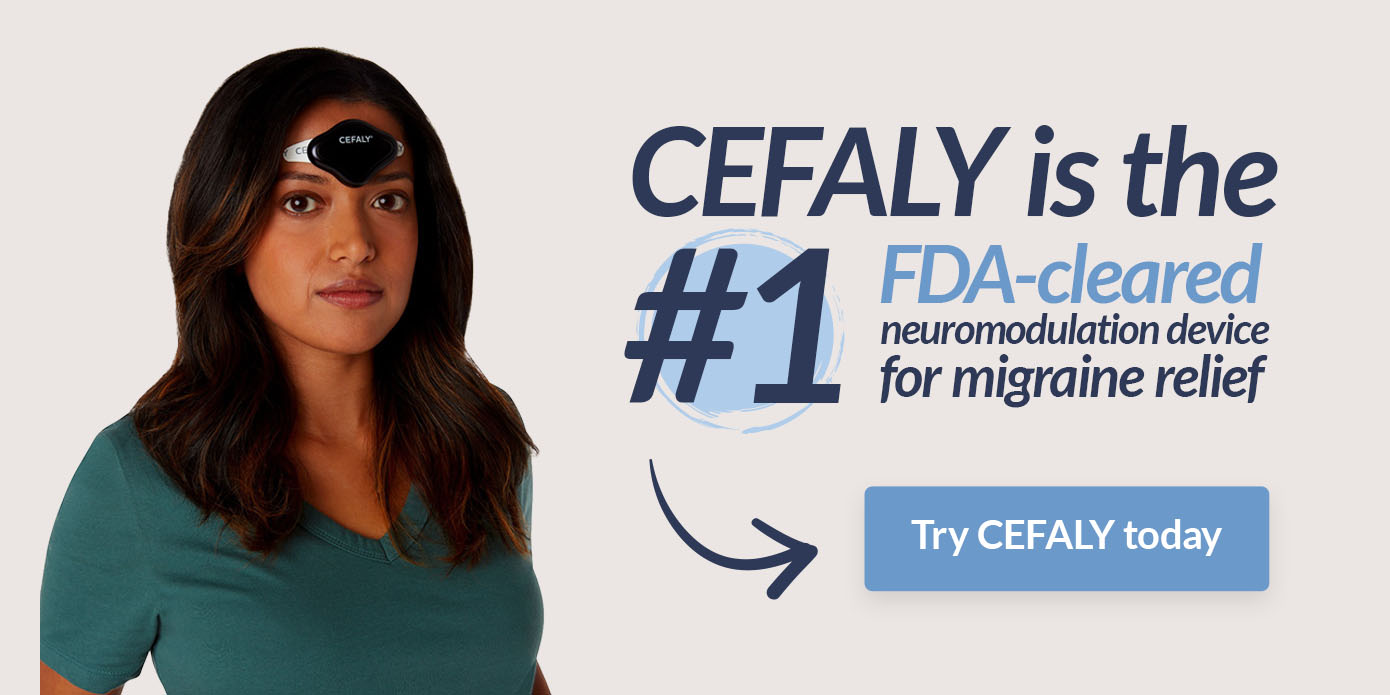




Articles récents

Le guide essentiel des dispositifs médicaux pour la migraine
CEFALY is an FDA-cleared medical device that targets the main pathway for migraine pain: the trigeminal nerve (the…

“CEFALY Gave Me My Life Back”: Camille’s Search for a Drug-Free Migraine Treatment
I've lived with migraine since my second pregnancy with my daughter. That pregnancy marked the beginning of my…

What Patients Need to Know About Episodic Migraine vs. Chronic Migraine
While official definitions classify episodic migraine as fewer than 15 headache days per month and chronic migraine as…